




By Melody Tan (@meowiie) , A travel-obsessed, cross-disciplinary creative working across culture, food and visual storytelling.
Although Penang is often introduced through its food, hawker stalls crowned with accolades and late night queues spilling onto sidewalks, this island off Malaysia’s northwest coast reveals itself as something far more complex once you arrive. It is a place shaped by a mosaic of ethnic influences, the result of waves of immigration that peaked over the last two centuries. Here, histories overlap, cultures are preserved not in museums but in daily rituals and time moves at a gentler pace.
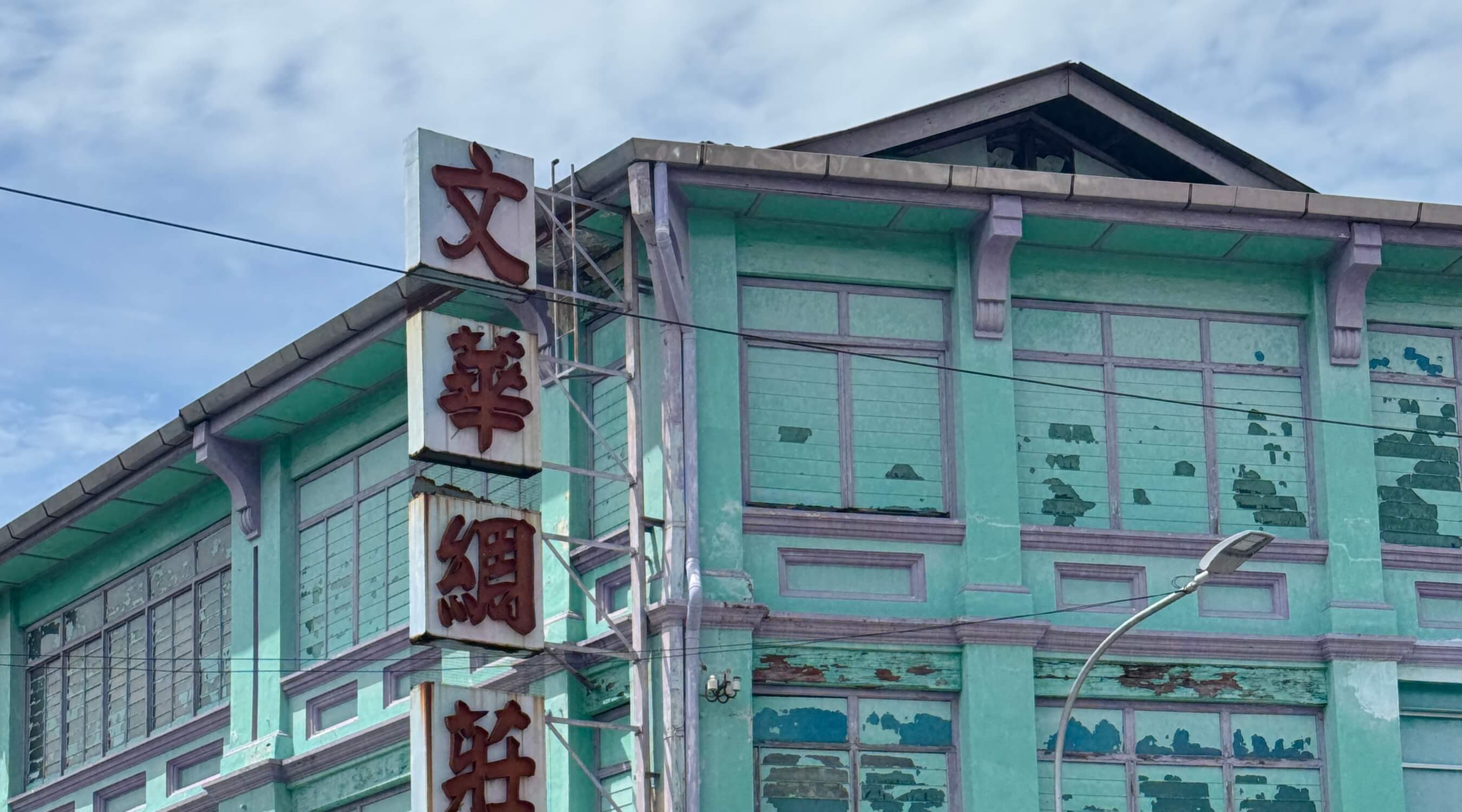
Returning to George Town – a UNESCO world-heritage site in the heart of Penang – for the first time in five years, the city’s charm revealed itself to me slowly. At its best, the city is filled with pastel hued shophouses, their paint softened by humidity and age, standing shoulder to shoulder along narrow streets. Ceiling fans spin lazily inside cafés and family run provision shops, while motorbikes weave through traffic with practiced ease. Tucked between these streets, the iconic murals of George Town appear almost unexpectedly, painted onto weathered walls and alleyways, adding to the city’s ongoing visual narrative.
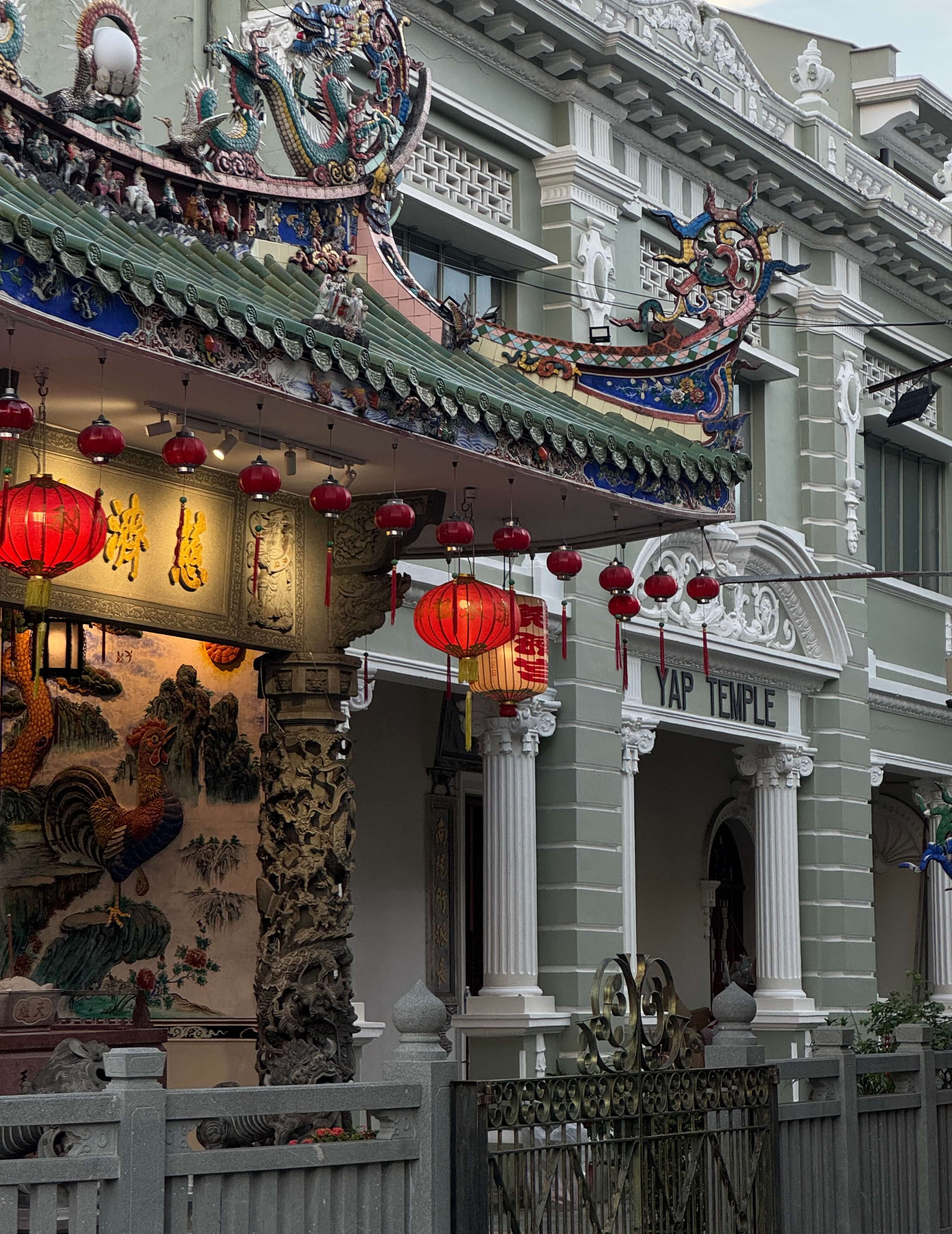
Penang carries its past openly. British colonial architecture sits beside Peranakan houses with their intricate, colourful tiles, just steps away from Hindu temples releasing the scent of incense and fresh flowers used for prayers and blessings. The contrasts are striking. Ornate heritage buildings coexist with structures worn by time, their cracked and fading exteriors bearing the marks of age, climate and history.
Despite its postcard appeal, Penang does not attempt to disguise its imperfections. The heat is relentless, sidewalks uneven and traffic occasionally chaotic. Yet these are the very details that feel inseparable from the island’s character. Some of the most meaningful discoveries come from wandering.
Family run provision shops, bakeries, tailors and hardware stores continue to line the streets, quietly serving the same neighbourhoods they have for decades. Life unfolds openly here with laundry hanging from windows, elderly residents seated outside their homes observing passers-by and hawkers preparing the same dishes they have perfected over decades, from recipes passed down through generations.
Penang may draw people in with promises of flavour and colour, but it rewards those who linger with something deeper. Nothing here feels rushed, there is a sense of place that is honest, textured and enduring. For me, the city feels intimate and lived in, anchored in its past while continuing to evolve. Some of the most exciting new concepts in Malaysia have chosen to set up shop here, and it feels significant, an evolution that does not erase what came before.
01
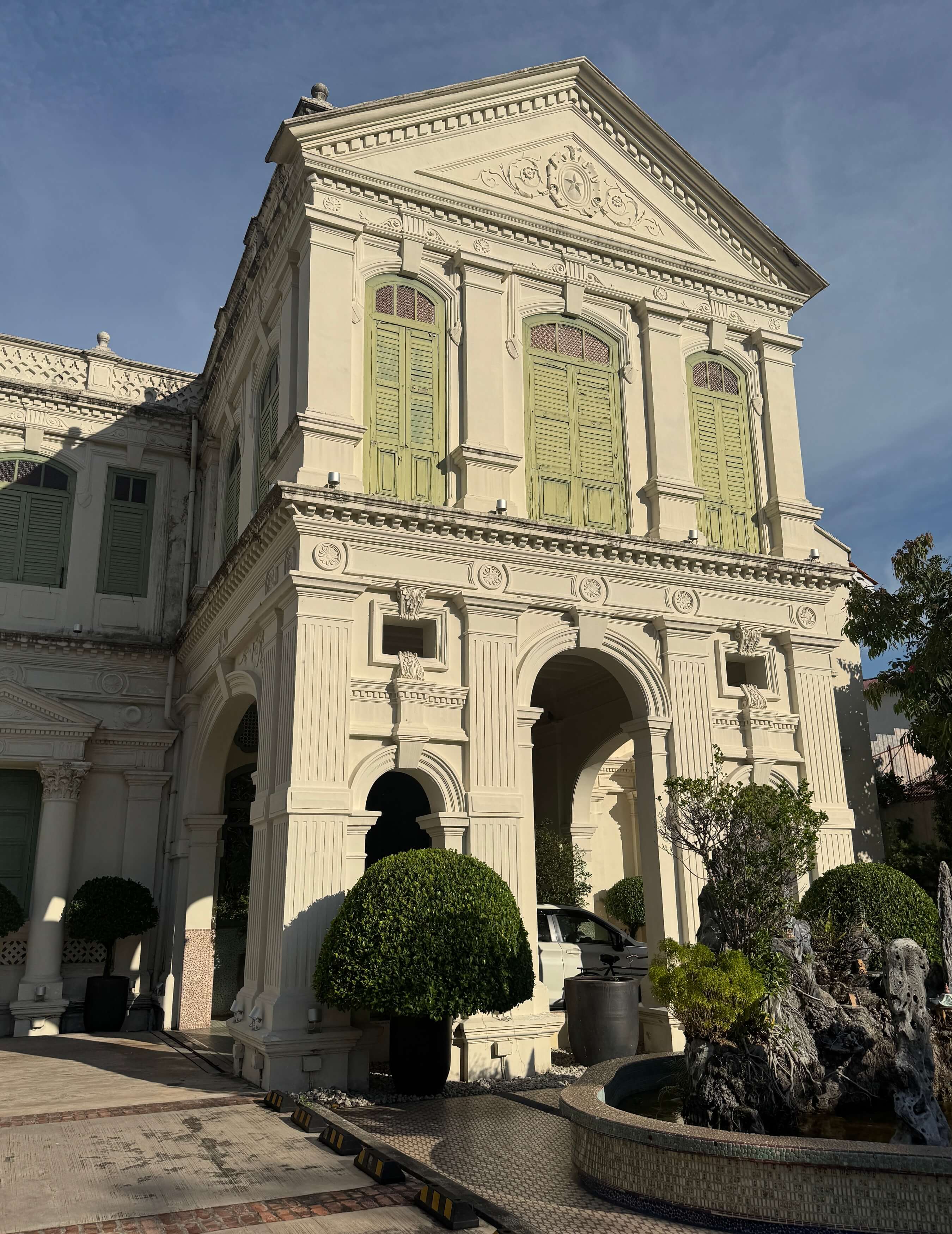
During my recent trip I found myself at The Edison right in the heart of George town, a storied restored 19th century mansion steps away from the UNESCO World Heritage site. It is the perfect blend of colonial charm and contemporary comforts.
02
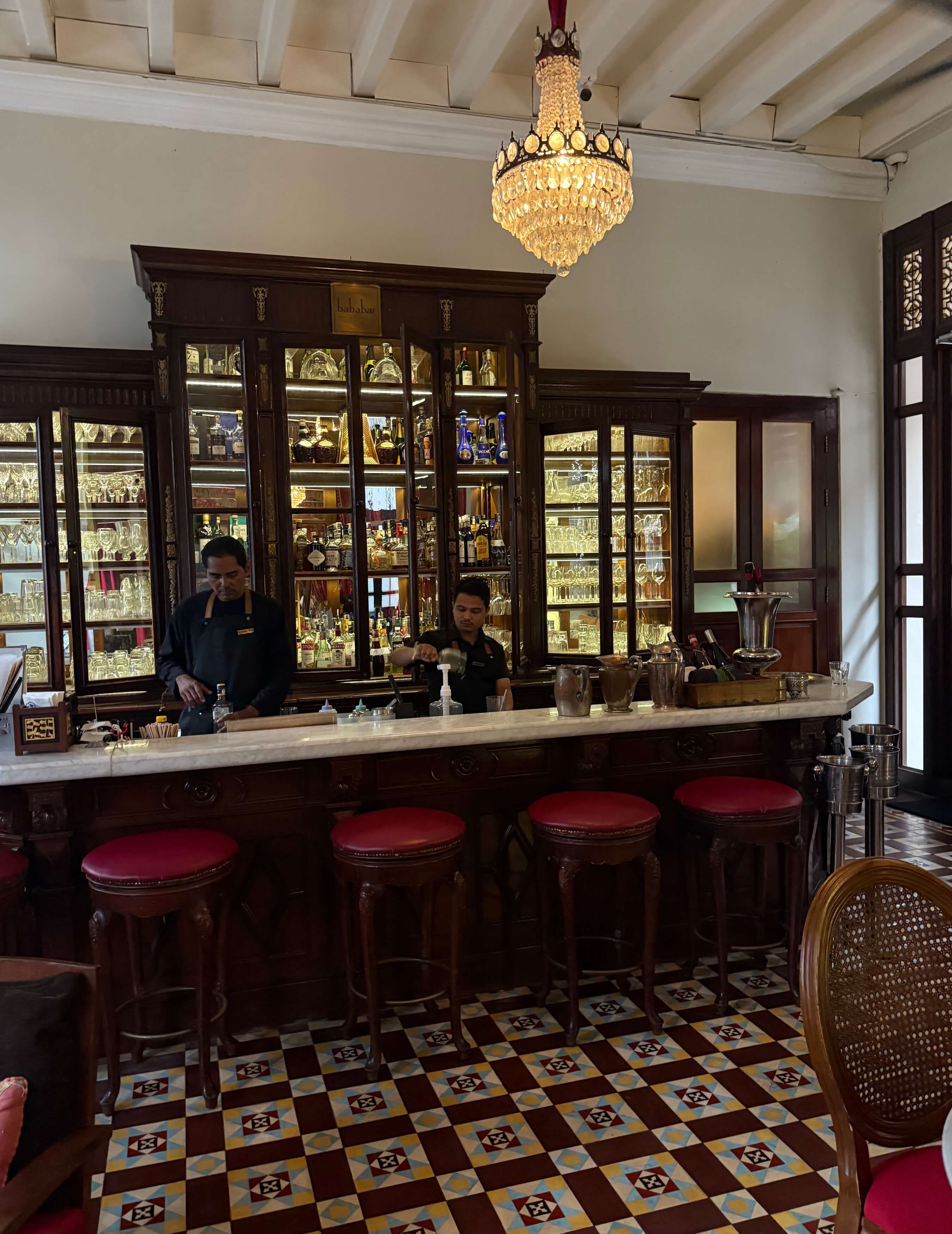
Seven Terraces feels like a place you sink into rather than simply stay at. Housed within a row of restored Anglo Chinese terrace houses, its central courtyard and Peranakan details create a sense of calm in the middle of George Town. It’s intimate, thoughtful, and one of those hotels that makes you want to slow down — have a drink at the bar and it feels as though you’ve stepped back in time.
03
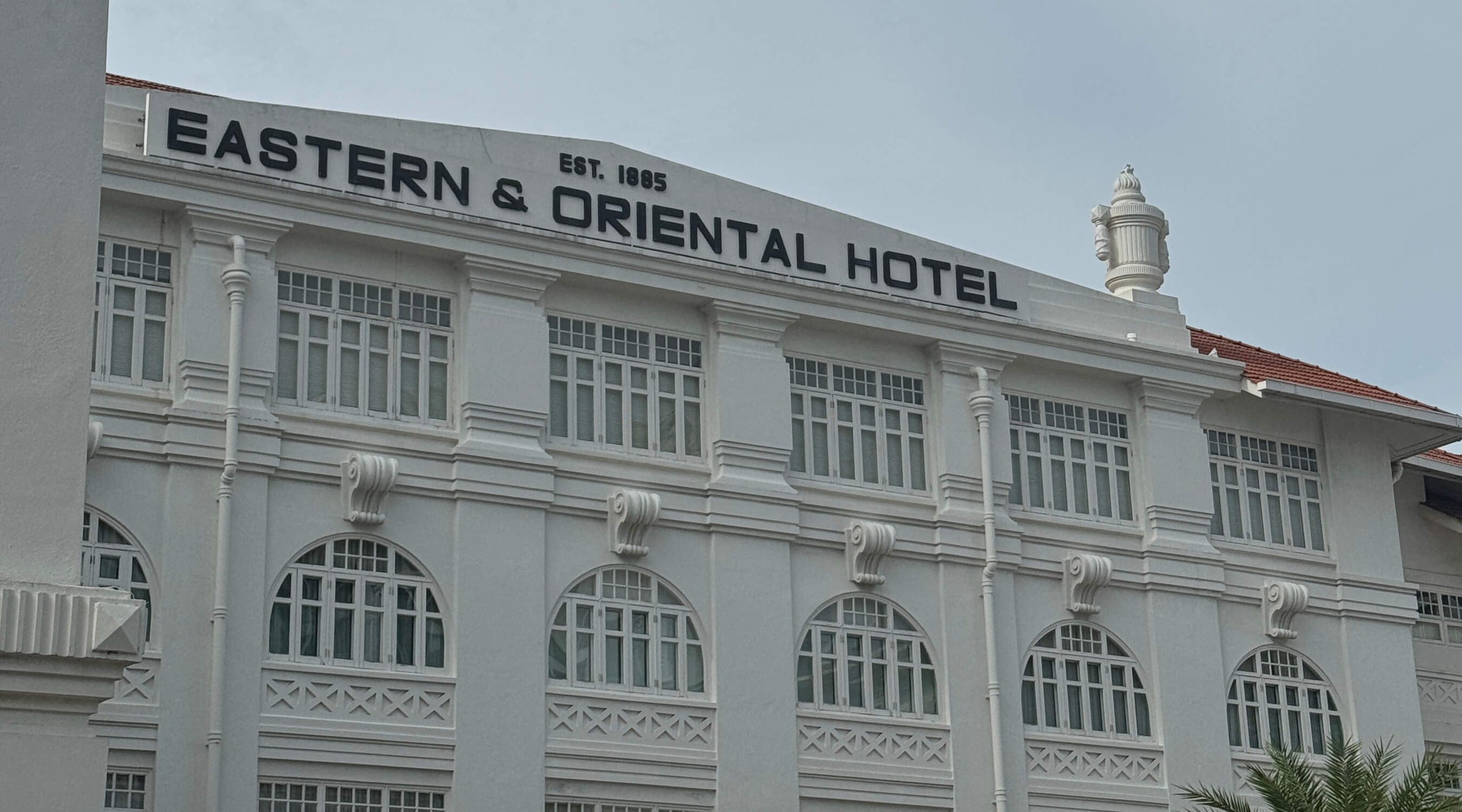
An enduring symbol of Penang’s colonial past, the Eastern & Oriental Hotel sits along the seafront with sweeping views of the Straits of Malacca. Grand yet relaxed, it offers a sense of old world elegance paired with modern comfort, making it a classic base for exploring George Town.
01
The Sandiwara food tour begins at Moh Teng Pheow, a heritage gem dating back to 1933, still crafting Nyonya kueh the traditional way. “Kueh” refers to a wide range of bite-sized cakes, puddings and pastries — sweet or savoury — rooted in Peranakan tradition. The restaurant also serves classic Nyonya dishes, a vibrant fusion of Chinese and Malay flavours shaped by the descendants of early Chinese settlers who intermarried with local Malays.
02
Although Hainan Chicken Rice takes its name from Hainan, it truly comes into its own in Malaysia and Singapore. With over 70 years of history, this shop prepares it the proper way — silky, succulent chicken, fragrant rice infused with garlic, fiery chilli sauce and a comforting bowl of clear broth on the side.
03
Cult hawker stalls keep to precise hours and often devote themselves to a single dish, honed and perfected over generations. Cooked over roaring open flames, the best char kuay teow is prized for its elusive “wok hei”: that smoky kiss born from heat, oil and a wok in constant motion, tossing plate after plate for hours on end. Expect a queue here, and don’t cut it too close to closing time, or you may find they’ve sold out.
04
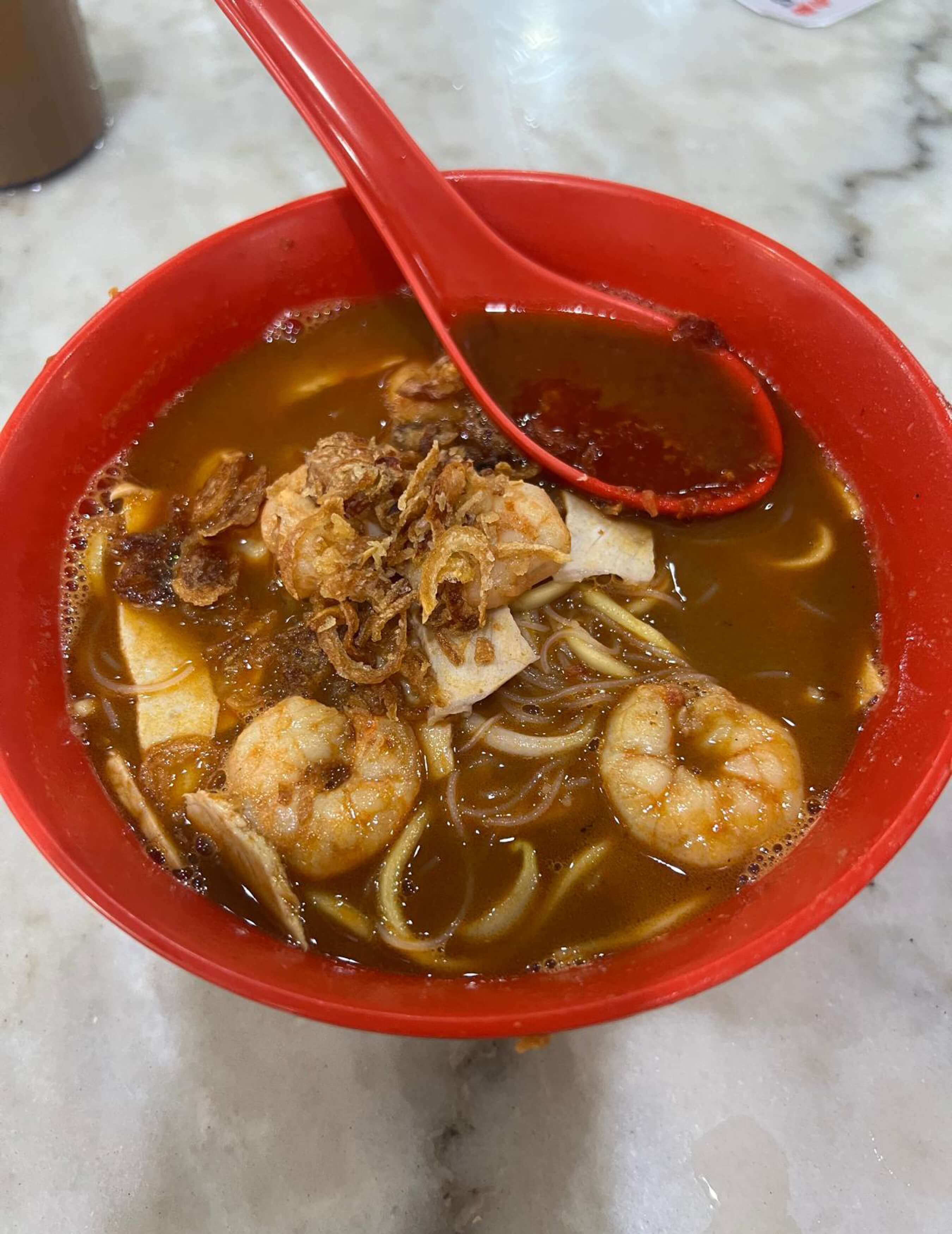
“Mee” is the Hokkien word for noodles, and in Penang, Hokkien Mee stars a fragrant spicy prawn broth, served with a mix of yellow egg noodles and rice vermicelli. Different stalls dominate different times of day, and for the breakfast crowd, Super Hokkien Mee is the go-to spot — be there early, as it closes promptly at 10 a.m. (or even sooner if the day’s batch sells out).
05
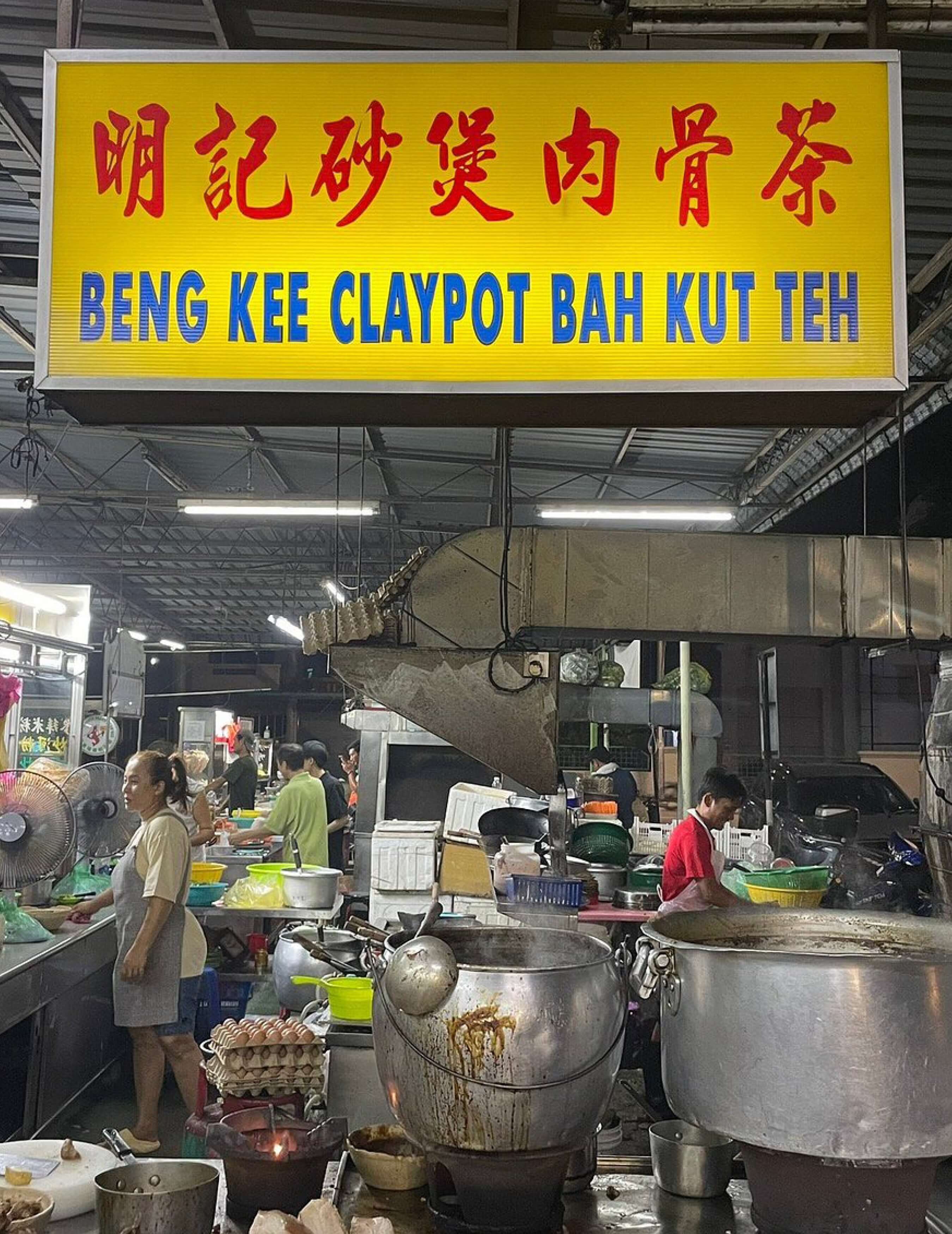
On the other side of the spectrum, Bung Kee opens in the afternoon and runs until midnight. Although the name is derived from “meat bone tea” in Hokkien, Bak Kut Teh contains no tea – just an aromatic pork rib soup that is simmered for hours with a blend of herbs and spices, served up with your choice of meat, ribs, tofu and vegetables, accompanied by yam rice or white rice.
01
Hidden behind a retail storefront in George Town, Backdoor Bodega has built a cult following for its playful approach to cocktails and storytelling. Its latest menu reimagines Penang as a drinking guide, with each cocktail tied to a local dish, street or memory. Part bar, part travel zine, it’s a thoughtful and immersive way to taste the island through local flavours and references.
02
A love letter to the 1980s, No Bar Here leans fully into nostalgia, from vintage posters lining the walls to a soundtrack of classic hits. The cocktail list follows suit, with playful takes on familiar favourites inspired by the era. Relaxed and unfussy, it’s the kind of place that feels easy to settle into as the night unfolds.
03
Tucked away on Jalan Gurdwara, Good Friends Club is a discreet cocktail bar known for weaving local ingredients and Penang flavours into classic drinks. Recently reopened in its original space after a renovation, it continues to push boundaries with a menu inspired by the island’s food culture. We were encouraged to try the Laksa Negroni, one of many examples of the bar’s inventive approach to cocktails built around unexpected local ingredients.
01
Best visited on weekends, Hin Bus Depot transforms into a lively creative hub with an artisan market featuring local designers, illustrators, ceramicists and small food vendors. It’s a good place to see Penang’s contemporary creative scene come together — informal, youthful and community-driven.
02
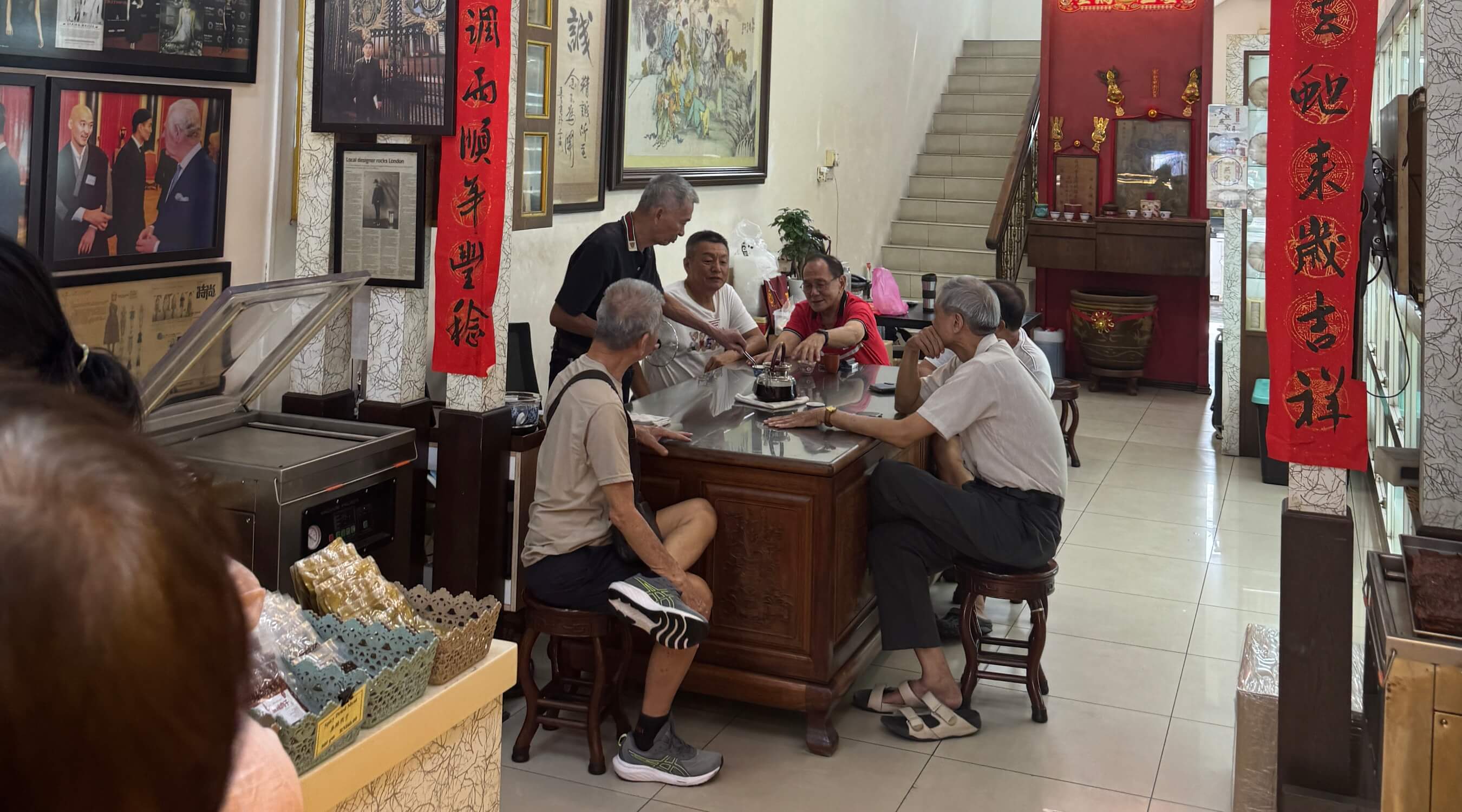
A long standing, family run business specialising in traditionally prepared dried meats. Walking in, you’re just as likely to find the owner sharing Chinese tea with longtime patrons as you are to make a purchase. It feels less like a shop and more like a gathering place, a quiet reminder that these food traditions are sustained as much by community as they are by craft.
03
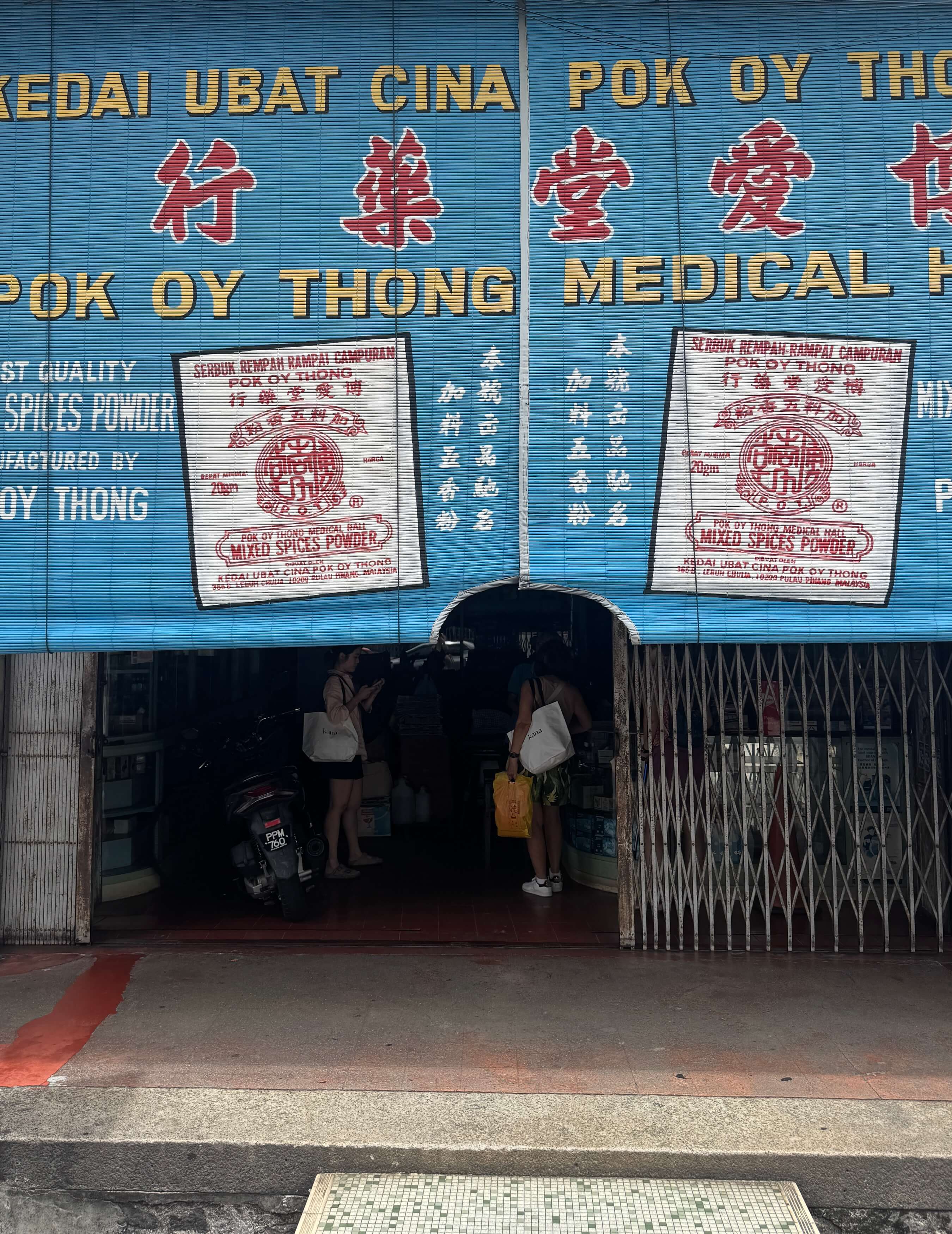
Stepping into Pok Oy Thong feels like time travel. A traditional Chinese medicine shop where little has changed over the years, people come here almost exclusively for one thing, their five spice powder, a closely guarded house blend. The owners are warm and generous with their time, and the experience feels less like shopping and more like being welcomed into a living piece of Penang’s culinary heritage.
01
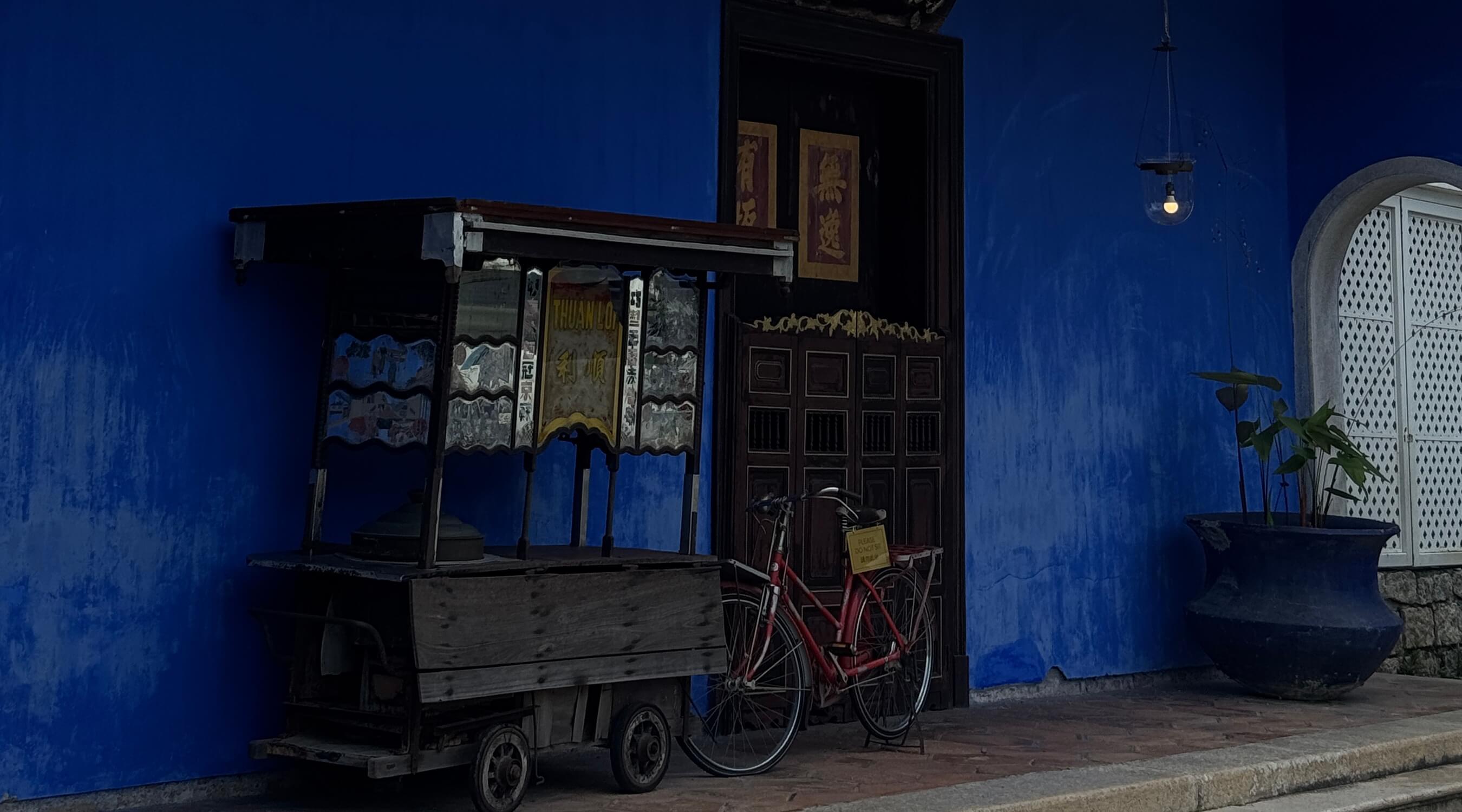
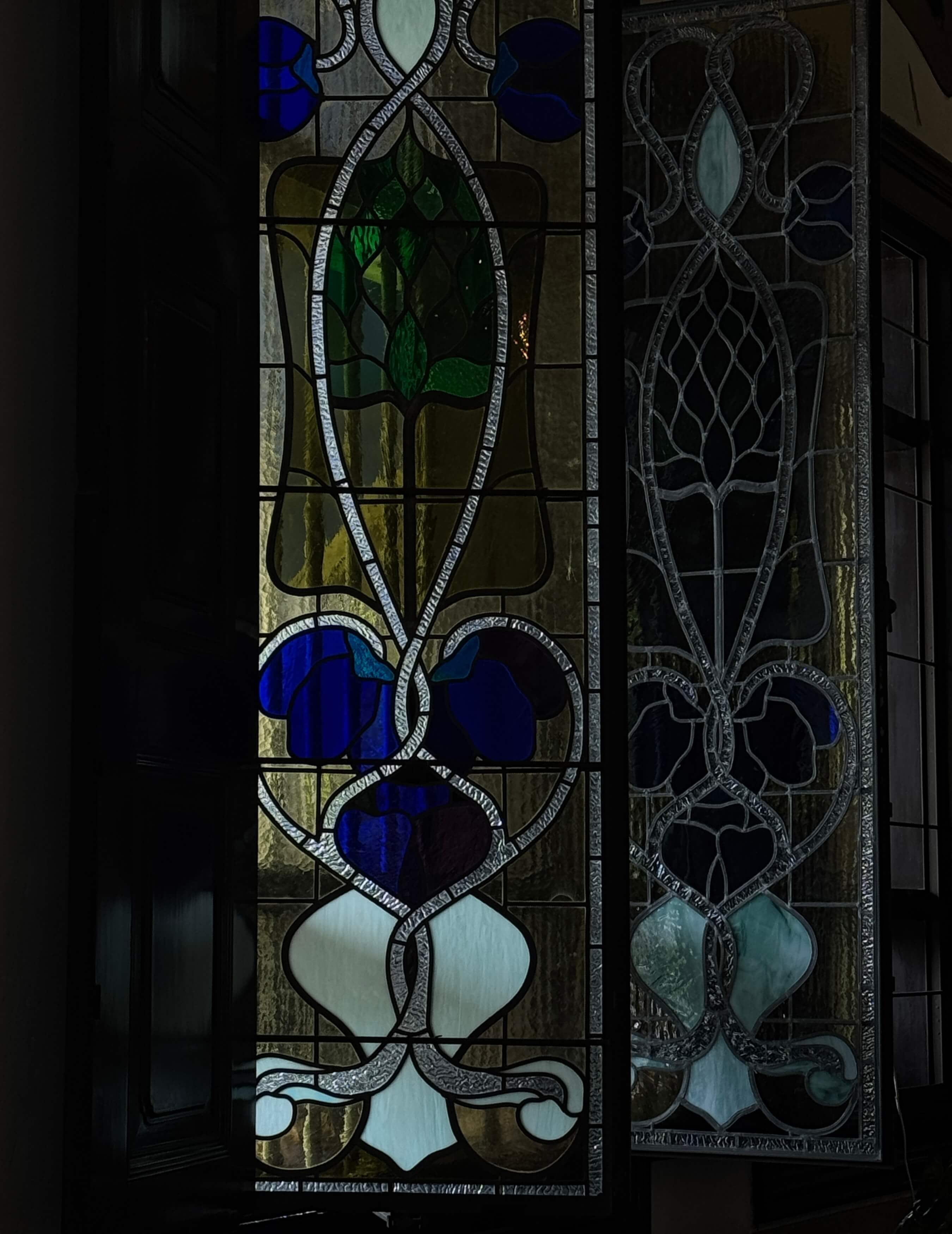
Beyond staying overnight, the Cheong Fatt Tze Mansion also offers guided tours that provide insight into the history, architecture and symbolism behind its iconic blue walls. It’s one of the best ways to understand Penang’s Peranakan past and the life of Cheong Fatt Tze himself – you might also recognise it as the backdrop for some scenes in Crazy Rich Asians.
02
A visit to the Peranakan Museum offers deeper context into the customs, interiors and everyday rituals of Penang’s Straits Chinese community. From furniture to jewellery and ceremonial objects, it helps piece together the cultural layers seen throughout George Town.
03
Scattered across alleyways and street corners, George Town’s murals are best discovered on foot. Painted directly onto weathered walls, they form an evolving visual narrative of the city and reward slow wandering rather than deliberate searching.


